


For many believers, faith is strengthened through the senses. God and the saints clearly belong to the spiritual realm, but human nature requires tangible elements to focus the mind and heart during prayer. This is where a sacred image or statue becomes valuable. It is not a matter of venerating material objects, but rather of using art as a window into the divine.
The purpose of this article is to guide you through the process of choosing a statue of patron saint a step-by-step guide that is not only aesthetically pleasing but also helps you draw closer to God through prayer.
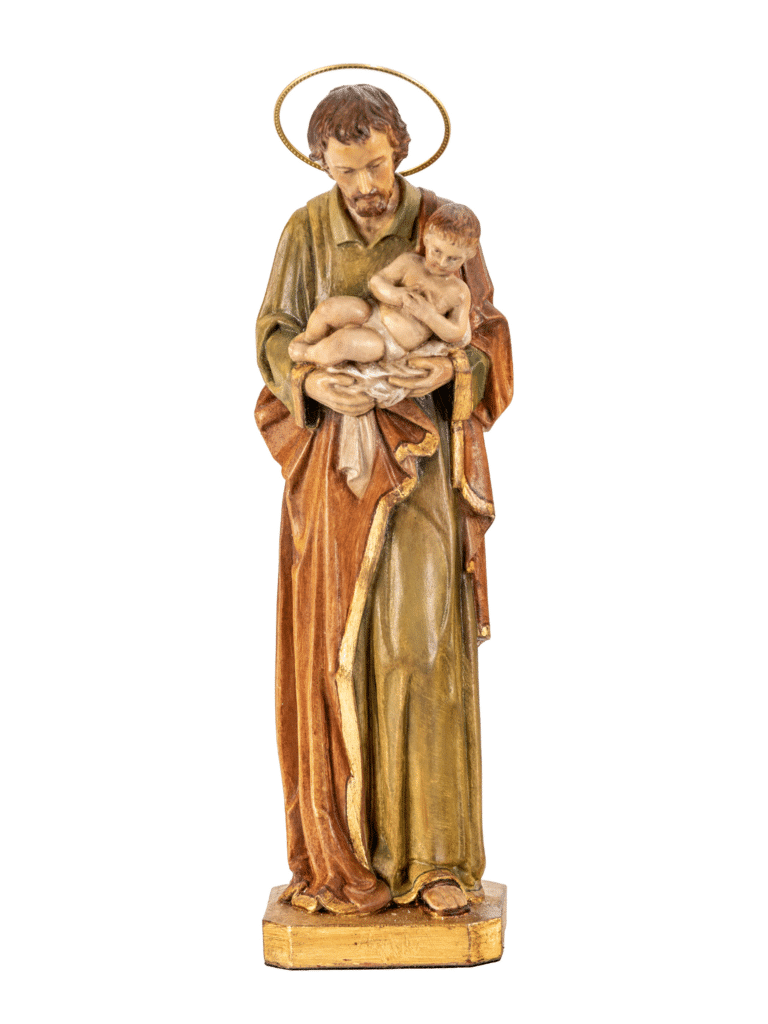
A patron saint is a saint who has a special bond with a person or group. For many, a saint is a companion on the journey of faith, a model of spiritual life whom we can ask to intercede on our behalf. A saint is an advocate before God. This deep-rooted tradition is especially evident in Spain, where most towns have a patron saint who often guides even the local festivals.
Although it is difficult to pinpoint the exact moment when devotion to specific figures began, the origin of this practice dates back to the early Christian communities. One could say that it arose in part from the custom of building altars and churches over the tombs of Christians who had been martyred; the best-known example is St. Peter’s Basilica, which was built over the tomb of this saint and where the relics of St. Peter are kept. The faithful sought the protection of those who had given their lives for the faith, adopting the Roman concept of patronus (protector) and transferring it to the divine realm.
The first step is to choose the patron saint who will be the focal point of your altar or prayer space. There are thousands of recognized saints, so you can approach this choice from different perspectives:
One of the most common ways to connect is through the first name. Celebrating your saint's day is a tradition that strengthens your Christian identity. Another way is to find out which saint is celebrated on your birthday and adopt that saint as your guardian, assigned by the calendar from the very first day of your life.
Over the centuries, the Church has assigned patronages based on the life and miracles of each saint. This makes it possible to find the ideal intercessor for very specific situations in life:
Sometimes, a saint simply It comes into your life. It could be through a book you read, a movie you watched, someone’s testimony, or a prayer you heard. If you feel a special devotion to a particular saint, this admiration is a clear sign that this is a good saint to have as a patron saint statue.
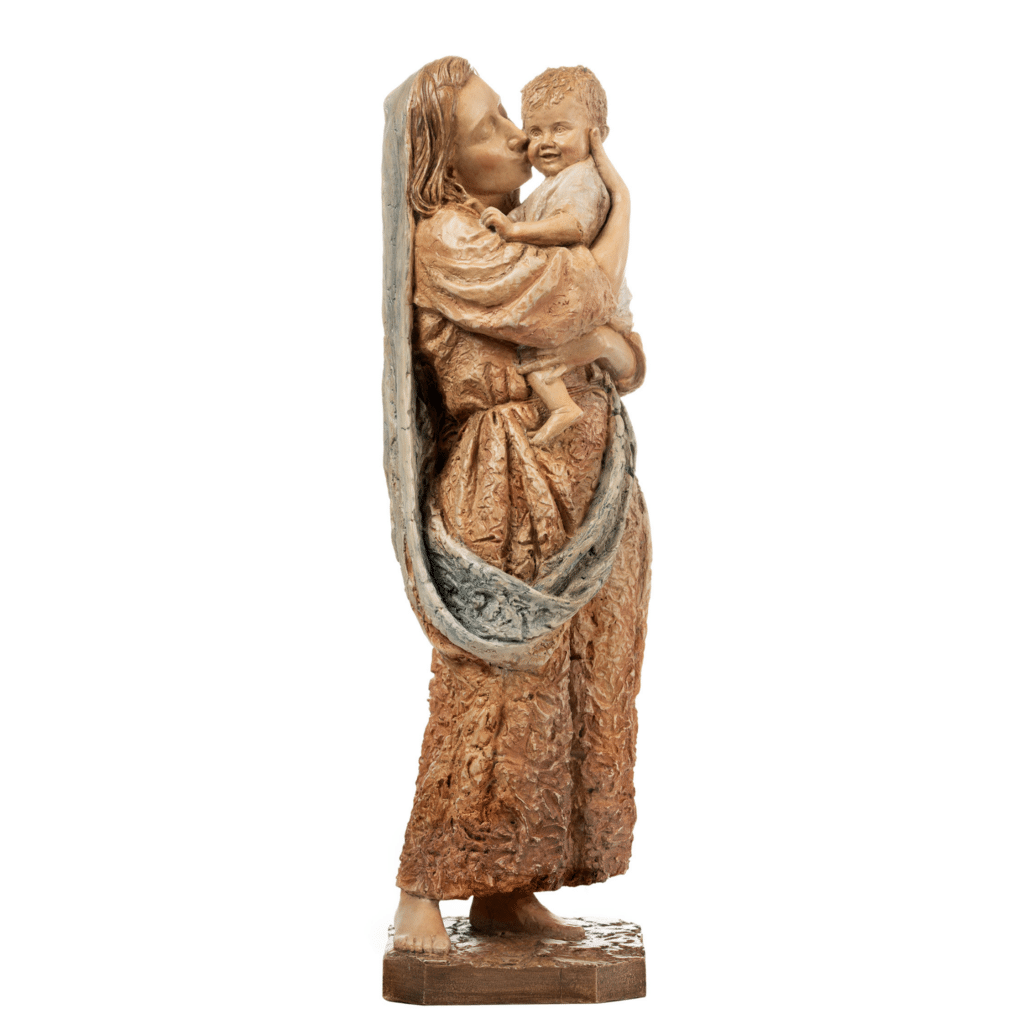
In sacred art, statues of saints are not merely realistic portraits. Over the centuries, artists have used the iconography to tell us the saint's story and help us tell them apart. When choosing a sculpture of a patron saint, understanding the iconography is very important, since it determines which aspect of the saint's life you want to draw inspiration from.
As you look at different statue options, you'll notice that many saints are holding specific objects. These items are known as “attributes.” Here are a few of them and their meanings:
| Object/symbol | Meaning | Saints with whom they are associated |
| The Book | Wisdom, Sacred Scriptures, Doctor of the Church | St. Augustine, Saint Teresa of Ávila, Saint Thomas |
| The Palpa or Sword | Martyrdom, victory over death, extraordinary strength | Saint Paul, Saint Catherine, Saint Sebastian |
| The Lily | Purity, chastity, devotion to Mary, peace | Saint Joseph, Saint Anthony of Padua, Saint Aloysius Gonzaga |
Once you know who your patron saint is, it's time to choose a statue, but before you buy it, you need to be clear about what place Wherever you want to place it, if it’s a small table, don’t choose a very large figurine, as it can make the space feel cramped. On the other hand, a tiny figurine on a massive piece of furniture will go unnoticed and lose its impact. It’s also best to leave enough space around the figurine so you can place a candle or a vase of flowers without making the space look cluttered.
Choosing the right location is important so that it can fulfill its function of to inspire prayer, it should be placed in a suitable, visible location that is proportionate to the available space; this could be a prayer corner, a nightstand, or a niche. The size of the piece should be determined based on where it will be placed.
Economic considerations also play an important role in choosing a patron saint. There is no right or wrong choice—only the one that best fits your circumstances and values.
There are various ways to obtain the statue; you can go directly to a crafts workshop, or if your budget is limited, look for an industrially produced bust—even if the finish isn't as refined, the important thing is that the meaning remains.
Choosing a meaningful statue of a patron saint connects the history of the Church and sacred art with your own spiritual journey. It is not an impulse purchase, but an act of discernment. When you find the right image, you will notice that your space takes on a new sense of peace.
Once the statue arrives at your home, tradition suggests performing two final actions to seal this bond:
At Granda There are many options for religious figurines designed to fit into the corner that each person considers most suitable for their home. However, beyond their aesthetic value or their location, the placement of this image takes on its true meaning when it is connected to the Church’s liturgy.

