


The religious architectural heritage represents an invaluable legacy that connects communities with their history and deep faith. However, the inexorable passage of time always leaves its mark on the original stone, wood and mortar. For those responsible for parishes and dioceses in both Spain and the United States, assessing and carrying out ongoing conservation of these sacred spaces is a truly fundamental task..
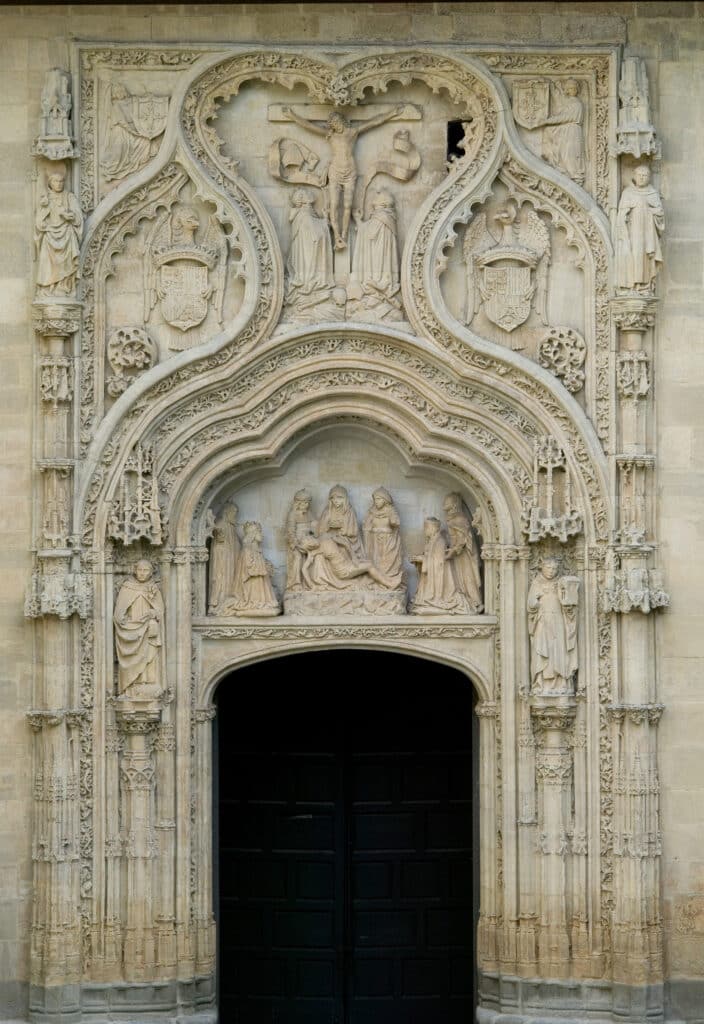
A vital question frequently arises as to when is the most appropriate season to perform technical inspections. Addressing the structural damage to churches requires meticulous planning and continuous monitoring to prevent small deteriorations from suddenly becoming irreversible and extremely costly problems.
The surprise appearance of cracks detachments or dampnesss should never be taken lightly in the field of heritage conservation. Understanding the exact origin of the cracks in ancient temples allows you to act with enormous speed and efficiency, safeguarding not only the sublime beauty of the site but also the absolute safety of all the faithful. Throughout this article we will explore the definitive keys to identifying the perfect moment of evaluation. We will analyze in depth how the climate, the age of the construction materials and the daily use of the building influencesThe need to contact experts in the field of sacred art cannot be put off.
Historic buildings breathe and move imperceptibly over the years. Their heavy foundations rest on soils that can suffer notable alterations due to hidden hydrological factors or very low intensity seismic movements. When we speak of structural damage in churches, we are referring to a complex set of pathologies that seriously compromise the general stability of the entire monumental complex.
In Spain we find imposing cathedrals stone buildings and centuries-old rural chapels that have withstood countless centuries of inclement weather. In the United States, there are beautiful historic missions and thriving urban parishes that also require extremely rigorous and specialized care because of their particular materials.
To fully understand the nature of these problems, it is essential to analyze the original construction materials. In the Spanish peninsular territory there is an abundance of buildings made of thick masonry, carved ashlar stone and strong Mudejar brick. These noble components have a particular porosity that slowly absorbs environmental humidity and gusty rain.
By contrast, in the sunny southern and western states of the United States, many historic missions were erected using handcrafted adobe, wood framing and terracotta. Although the elements vary greatly, the formation of cracks in ancient temples is due to completely universal physical principles caused by the inevitable fatigue of the material and the stresses of the subsoil.
The first warning signs almost never present themselves as huge cracks easily visible from the main street. Often the first structural damage to churches begins with extremely subtle signs that go completely unnoticed by the untrained eye of passersby. Heavy main doors that suddenly scrape against the pavement or fail to fit smoothly into their wooden frames are a very clear warning of differential ground settlement.
Likewise, the spontaneous and unexplained breakage of delicate stained glass windows or the constant fall of small fragments of mortar from the high vaults indicate that internal forces and pressures are desperately seeking new escape routes. Early identification of these incipient cracks in old churches allows parish committees to intervene long before the beautiful structure reaches a dramatic point of no return.
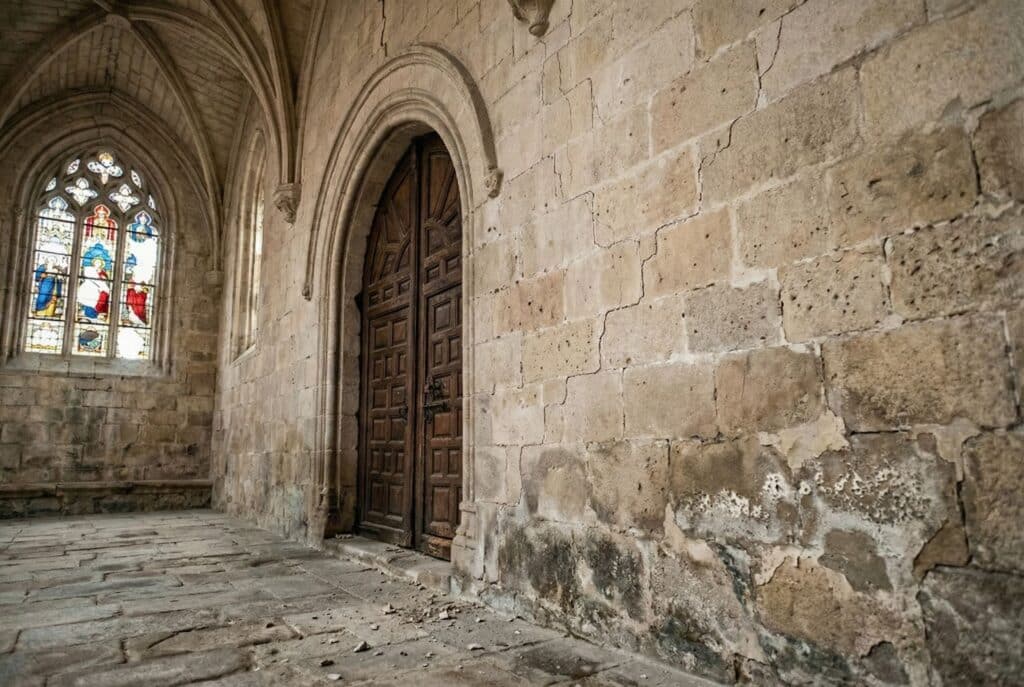
Capillary dampness represents another truly silent but devastating enemy to the firm stability of the sacred building. When water rises by capillary action from the wet ground, it slowly breaks down the traditional binders that bind the load-bearing wall together. This gradually weakens the vertical load-bearing capacity and triggers severe medium-term damage to the building. damage to the church of large volumetric size.
Dark spots or bumps of paint on the underside of interior walls usually immediately precede the dreaded appearance of deep cracks in ancient temples that ascend in the form of a staircase looking for the driest outer surface.
The local geographic climate plays a key role in the cyclical expansion and contraction of building materials in all seasons. Therefore, choosing the right season of the year is decisive in order to diagnose with the utmost precision the structural damage to churches. Specialized architects and restorers unanimously agree that times of mild seasonal transition offer the most ideal environmental conditions for a truly exhaustive visual and mechanical examination of the entire majestic structure.
During the bright spring, the natural thaw and frequent spring rains quickly bring to light chronic problems of rain seepage that during the harsh winter remained completely hidden or frozen under the shingles.
This benign season allows experts to observe firsthand how unwanted water flows through the foundation and to check in situ whether this constant moisture aggravates the cracks in ancient temples. The gradual and gentle rise in outside temperatures makes it much easier to inspect high roofs and steeples without the extreme danger of slipping due to accumulated snow or crystallized ice.
On the other hand, the quiet autumn presents itself to professionals as the second great annual window of opportunity. After the endless months of scorching summer heat, architectural materials return to their usual state of rest.
It is the perfect and strategic moment to assess whether the strong sun has dangerously dried out the wooden main beams or whether it has considerably widened the dreaded cracks in ancient temples. A rigorous autumn inspection efficiently prepares the temple to face the harsh winter ahead by ensuring that the roofs and facades are fully sealed against storms.
Performing a thorough diagnostic evaluation in the middle of a freezing winter or in the middle of the summer heat wave can seriously distort the final results of the technical expert report. The extreme cold strongly shrinks the natural stone and lime mortar, temporarily hiding from the naked eye the true and worrying magnitude of the structural damage to churches.
In addition, the constant presence of morning frost makes safe access to high ledges extremely difficult for operators. On the other hand, the excessive and suffocating summer heat expands metals and masonry to the maximum, inevitably causing certain surface cracks to appear much more serious than they really are in practice.
To clearly illustrate these remarkable seasonal differences, we have prepared a very useful and highly visual outline for all readers. This simple tool helps parish leaders to plan their busy annual maintenance schedules. Correctly assessing the structural damage to churches depends to a large and decisive extent on the intelligent choice of the ideal climatic season.
| Season of the year | Visibility of construction pathologies | Expert's level of diagnostic accuracy | Adequacy to search for cracks in ancient temples |
| Spring | Very high due to recent heavy rains | Excellent at showing active waterways | Optimum time to detect the origin of dampness in thick walls |
| Summer | False alarm due to very high thermal expansion | Regular and unreliable for taking measurements | Temporary dilated fissures are visible, which confuse the inspection. |
| Autumn | Discharge after post-summer contraction | Very good for preventing winter infiltrations | Ideal time for sealing openings before the first hard frosts |
| Winter | Severe shrinkage and ice | Deficient and very dangerous for technical equipment | Very low temperatures cleverly conceal the actual severity of the deterioration |
Listening attentively to the actual experiences of other assemblies enriches our own communal understanding of the urgency of this prophylactic work. Each venerable temple has its own architectural voice and its own healing times. Initiating the processes of conservation and restoration absolutely always begins with a phase of sincere recognition and acceptance of the deterioration by the entire active local Christian community.
From a vibrant young historic parish in California, the chairman of the finance committee relates his personal experience. "We had been putting off the necessary overhaul of the large roof for quite a few years until one rainy fall we discovered some very alarming dampness near the sacred high reredos. We quickly contacted real specialists to assess the severity of the dampness. structural damage to churches was the smartest and most providential decision we could have made.
The senior technicians explained to us in detail that those enormous cracks in ancient temples are often dramatically aggravated by minor local earthquakes. Thanks to a courageous and timely intervention, we were able to secure the main dome perimeter and today our grateful community prays with complete peace of mind under a beautiful and safe roof.
In Spain the experienced parish priest of an imposing sixteenth century collegiate church shares a testimony quite similar and extraordinarily valuable to all. "We observed with deep concern that the noble bases of the main columns presented strange cracks after a particularly severe frigid winter in our region.
We study in depth how to plan a comprehensive church renovation in 2026 and we resolutely initiated the complex expert inspections when the sweet spring arrived. We were astonished to discover that a small subway water current was silently eroding the millenary foundations, causing very serious structural damage to churches of our entire historic county. Acting decisively at the right seasonal moment saved our beloved heritage.".
Once the dreaded "dreaded" spots have been visually located, they are cracks in ancient temples panic should never be the initial response of the committee. The first rational step is to thoroughly and photographically document every crack discovered by carefully noting the date of discovery and approximate dimensions with a metric ruler. This detailed visual record is truly invaluable to design engineers as it allows them to accurately measure the actual rate of propagation of the sad deterioration.
Immediately afterwards it is essential and urgent to seek highly qualified professional advice. It is definitely no good to hire just any generic construction company in the neighborhood. The extreme sensitivity required to deal adequately with structural damage to churches requires the exclusive intervention of professionals extensively trained in delicate sacred art and pure patrimonial architecture. These great experts understand to supreme perfection the complex language of the ecclesiastical architecture and know perfectly well how to apply innovative technical solutions that respect as much as possible the rich history and solemn liturgy of the sacred place.
The experienced technical team will use state-of-the-art, ultra-high-precision tools to monitor millimetre-accurate, ever-changing cracks in ancient temples and scientifically determine whether they are fully alive or inactive. A dead crack is one that has already been structurally stabilized in the past and only requires a thin superficial aesthetic seal. A live crack, on the other hand, continues to move dangerously month after month and requires immediate and robust internal structural reinforcement. Knowing with absolute certainty this subtle difference avoids unnecessary economic expenses and wisely focuses the limited financial resources of the modest parish where they are most needed.
Looking with immense hope to the future means jealously guarding the precious past that has been divinely entrusted to us. The sacred precincts of parish churches are much more than mere tidy accumulations of cold bricks and ancient mortar. They are eternal and silent witnesses of countless joyful baptisms, hopeful weddings and emotional farewells throughout the indelible centuries. For all these reasons, we must keep a close eye on the incipient appearance of cracks in ancient temples is nothing less than taking care of the fragile heart of collective and community memory.
The countless generations to come deserve to inherit very safe and inspiring places of worship that elevate the human spirit toward the greatness of God. Preventing the study and rigorous treatment of structural damage to churches The fact that these beautiful beacons of divine light continue to shine uninterruptedly both in the historic Spanish cobblestone squares and in the dynamic and growing neighborhoods of the United States is amply guaranteed. Intelligent foresight, infinite patience and timely action are undoubtedly the best and most effective human tools to fully protect our splendid religious architectural heritage.
We can in no way allow the rapid passage of time to fatally weaken the solid walls that hold firm our unshakable collective faith. Analyzing and repairing in time the profound cracks in ancient temples requires great patience, a sincere love for the beautiful art and a deep and undeniable respect for all that is sacred. When a brilliant multidisciplinary team of experts courageously tackles the very complex structural damage to churches not only repairs old buildings with scaffolding, but wonderfully restores a powerful and inexhaustible symbol of steadfast hope that will stand tall for many, many more generations to come.
If your parish needs an expert assessment to ensure its stability, contact our specialized team and protect your architectural legacy today.

