


Since the first centuries of Christianity, the liturgical vestment has had a profound spiritual significance. It is not just a set of fabrics or ornaments, but a visual language that expresses faith, the dignity of the priestly ministry and the solemnity of the Eucharist. Within this ensemble, the traditional chasubles play a prominent role. Their shape, color and ornamentation convey centuries of history, symbolism and sacred art.
The chasuble comes from the ancient paenulaa garment worn by Roman citizens to protect themselves from the cold and rain. It was a wide cloak that covered the whole body, a symbol of humility and simplicity. Over time, the Church adopted this garment as the proper attire of the priest celebrating mass, giving it a deep theological meaning.
The traditional chasuble represents the charity that should envelop the minister of the altar. It is the visible sign of the love of Christ that envelops the priest during the Eucharistic sacrifice. In fact, its enveloping form symbolizes that act of total self-giving. Each time the priest is clothed, he is reminded that he is acting "in persona Christi" and that his service is united to divine love.
Over the centuries, the design of chasubles has changed with the times, but their symbolic function has remained intact. From the broad, flowing forms of the Gothic style to the more structured lines of the Roman model, all seek to reflect the dignity of the cult and to elevate the spirit of the of those who participate in the liturgy.
The design of the traditional chasubles reflects the living history of the Church. During the Middle Ages, heavy fabrics and gilded embroidery were a sign of reverence. The wide, bell-shaped Gothic chasubles allowed for solemn movements and visual fluidity. Later, in the Renaissance, lighter versions emerged, with decorations that followed the aesthetics of the time, influenced by art and architecture.
In the 17th century, with the Baroque style, the Roman or "guitar" chasubles appeared, more rigid and ornate, adorned with metallic threads, braid and hand-embroidered religious symbols. These pieces not only embellished the liturgy, but also communicated a spiritual message through art.
Today, sacred art workshops preserve these traditional techniques, but adapt the forms to the current needs of worship. Lighter fabrics, breathable linings and high-precision embroidery combine artisanal methods with textile innovation. In the chasuble collection examples of this balance between historical fidelity and modern functionality can be seen.
One of the richest aspects of the liturgical vestment is the use of colors. Each hue has a symbolic meaning within the ecclesiastical calendar.
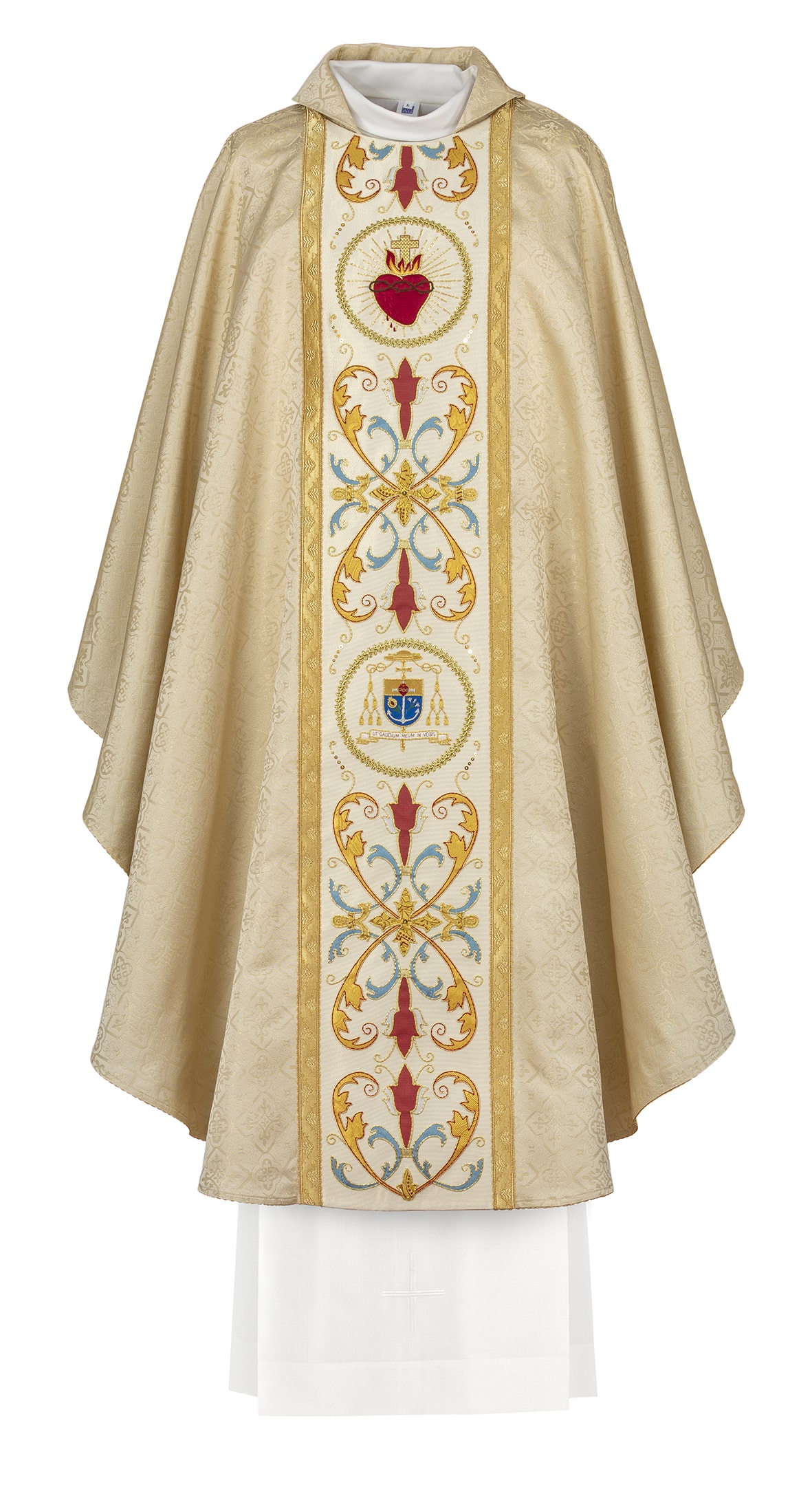
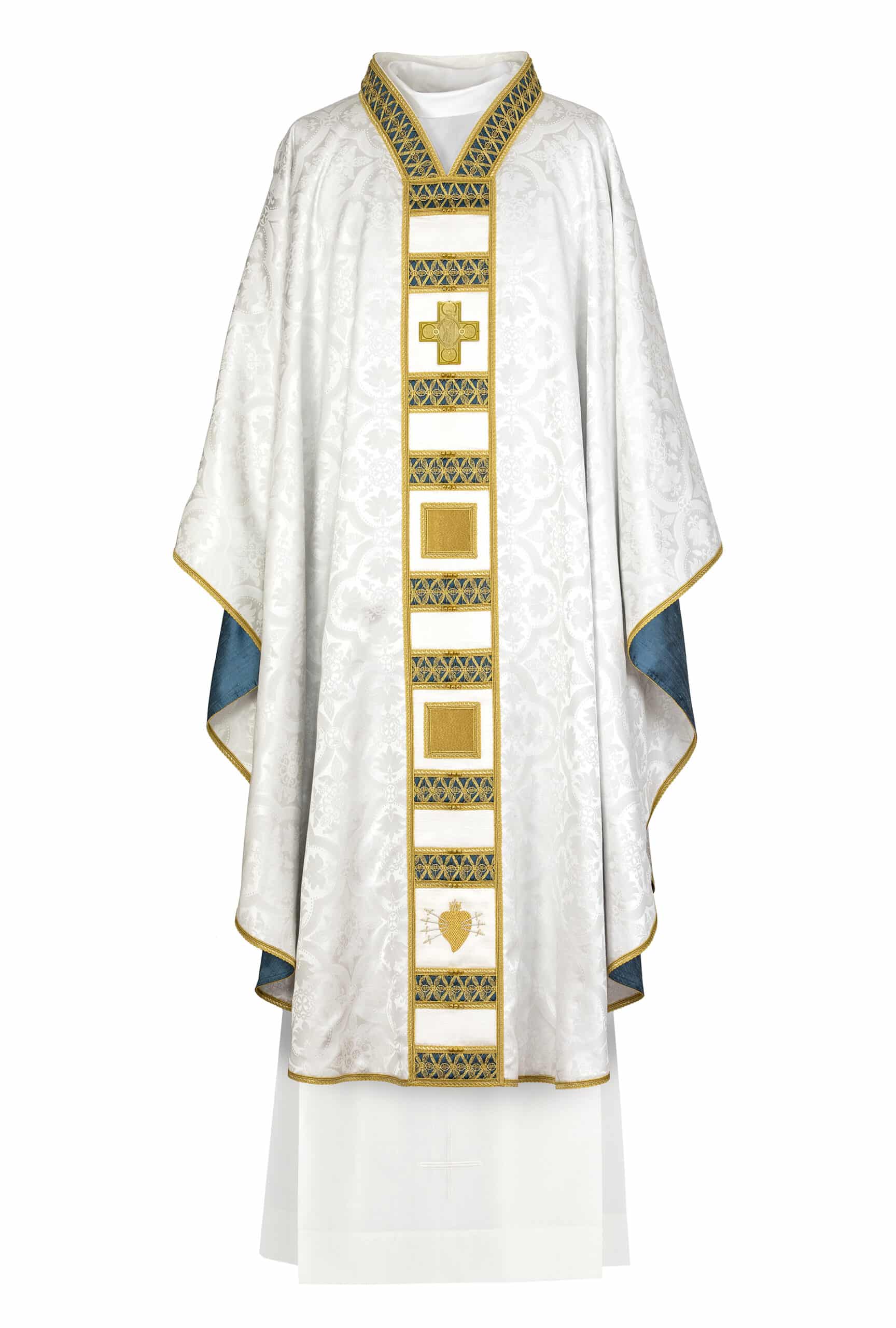
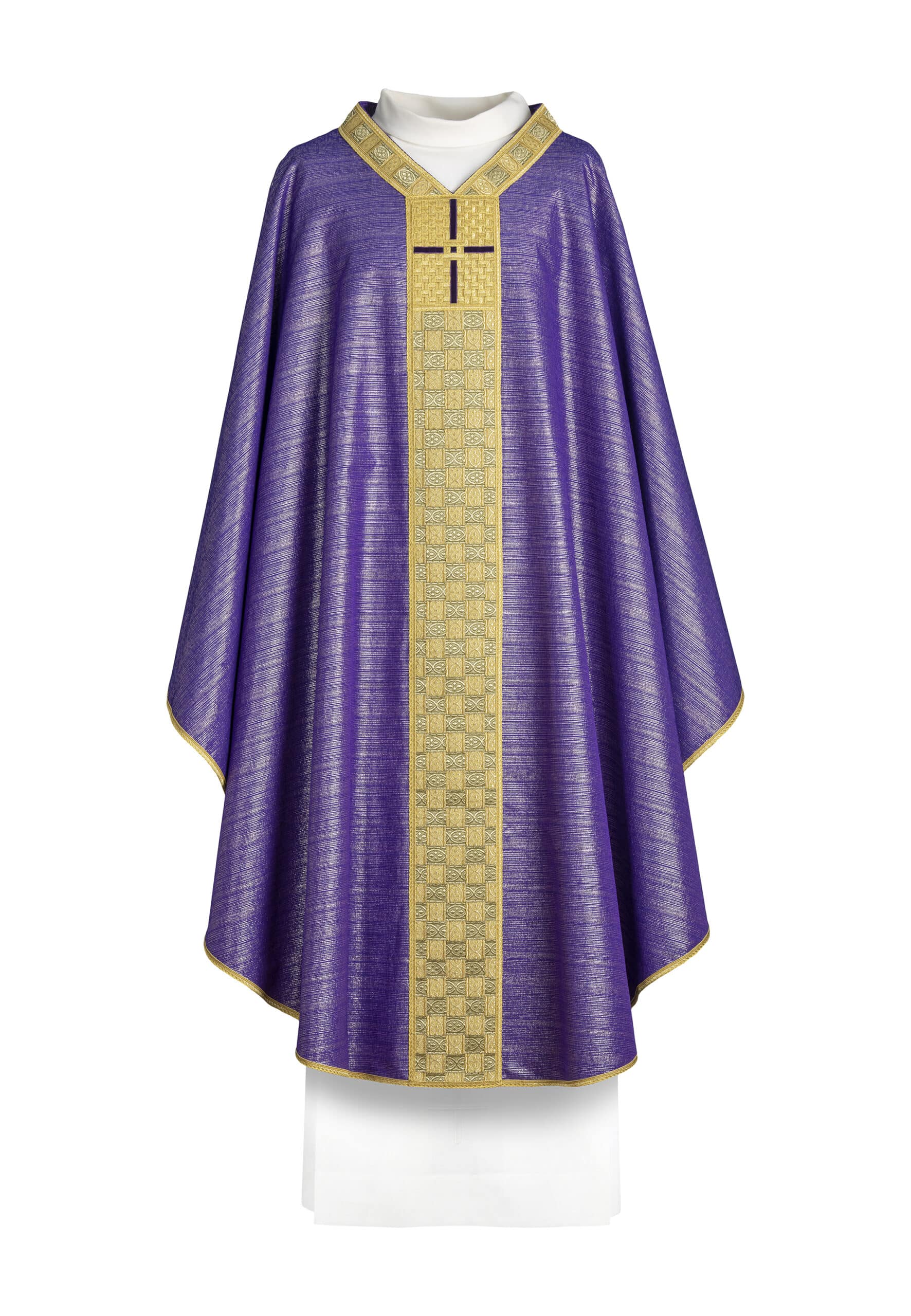
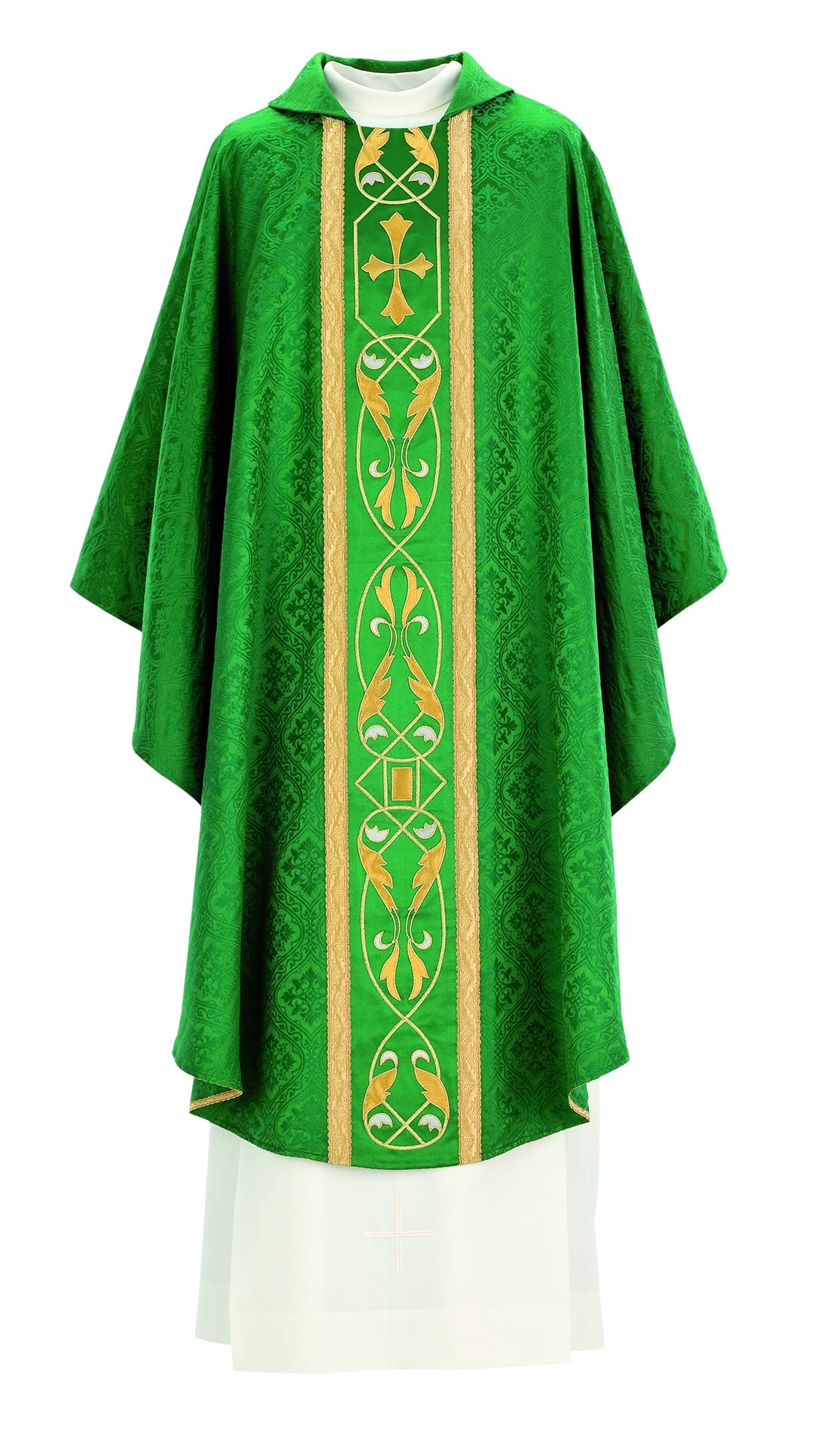
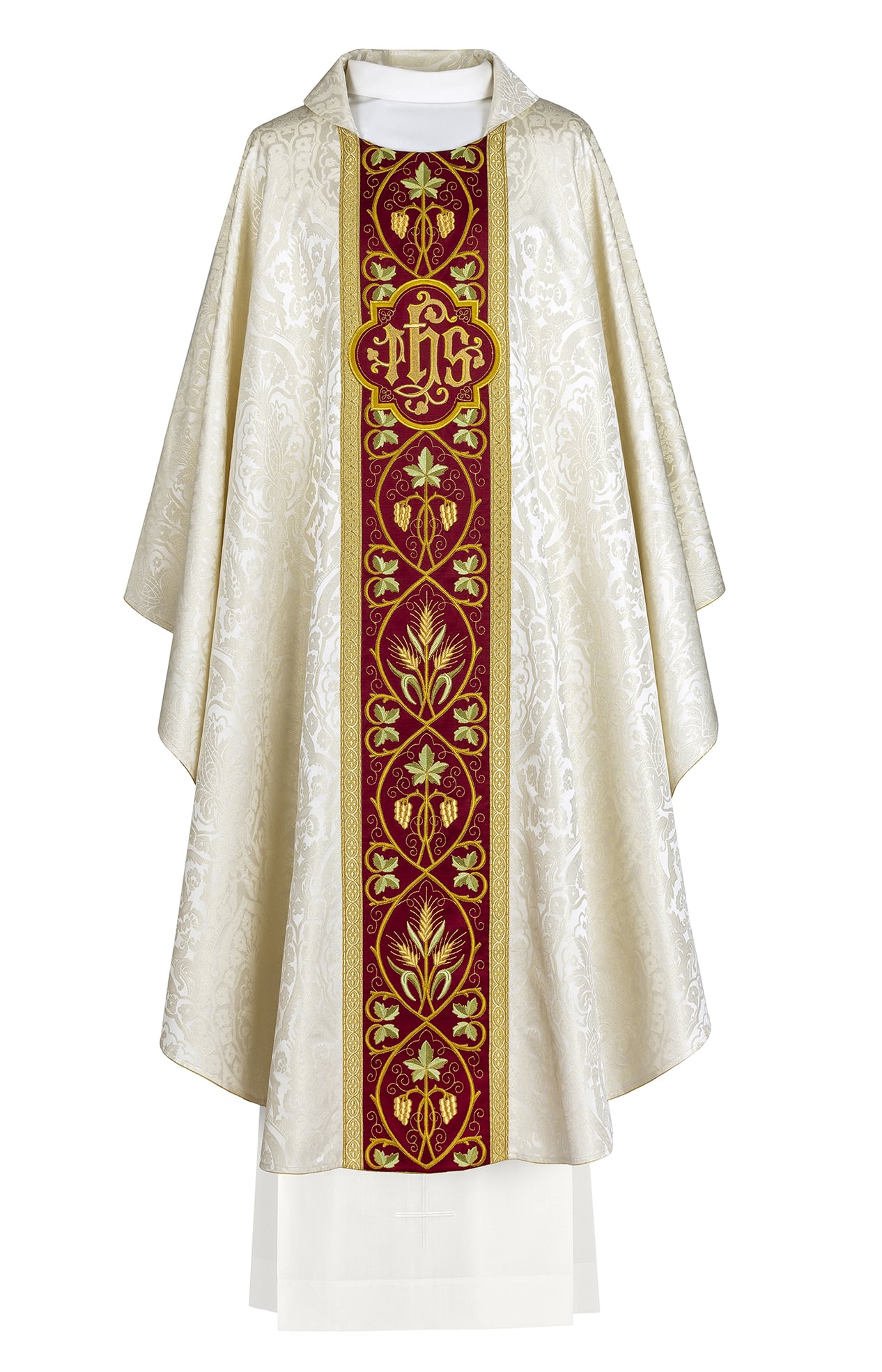
The white is used in celebrations of joy, such as Easter or Christmas, and in feasts of saints who were not martyrs. The green symbolizes hope and life, and is used in ordinary time. The red represents the fire of the Holy Spirit and martyrdom, whereas the purple is reserved for times of penance and waiting, such as Advent and Lent.
On special occasions, chasubles are used douradas o embroidery in gold, especially on solemn occasions. The color, together with the embroidered symbols, turns each garment into a visible reflection of the mystery being celebrated.
The hand-embroidered chasubles are one of the most delicate manifestations of sacred art. They bring together the tradition of craftsmanship and the theology of the symbol. The embroideries are not mere ornaments; each motif conveys a spiritual message. The mystical lamb, the chrismon or the ears of wheat represent the presence of Christ and the union between the divine and the human.
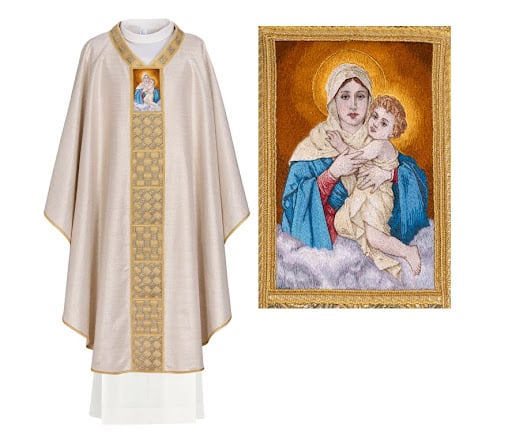
In workshops specialized in sacred vestmentsThese embroideries are made with noble materials such as gold, silver or natural silk threads. Many designs are inspired by medieval manuscripts and Byzantine mosaics, making each chasuble a unique work. The precision of the handwork and the harmony of the colors reinforce the visual beauty of the altar and help to focus attention on the Eucharistic mystery.
Although the modern liturgy allows for some variety in the style of vestments, the traditional chasubles are still the preferred ones in solemn celebrations. Their presence brings a sense of continuity with the past and reinforces the idea that the liturgy is not only a present act, but also a living memory of the Church over time.
In many parishes and cathedrals, antique chasubles are preserved as heritage treasures. In others, new versions are being made that combine classic lines with contemporary materials, striking a balance between tradition and functionality. This effort to maintain the visual heritage of the liturgy demonstrates the importance of art as a vehicle of faith.
Every detail in a chasuble has a meaning. The choice of fabric, the cut, the embroidery and even the drape of the fabric are designed to express reverence and solemnity. The making of these sacred vestments requires technical knowledge, but also spiritual sensitivity. It is not just a matter of creating a beautiful garment, but of offering an instrument for worship that accompanies the priest and helps the faithful to enter into the mystery of the celebration.
The handmade confection allows to personalize each piece according to the community, the calendar or the particular devotion. Thus, a chasuble can include symbols of a Marian devotion, of the Holy Spirit or of a patron saint. The final result not only has aesthetic value, but also devotional value.
The traditional chasubles are a tangible testimony of the union between art and faith. Through them one can read the history of the Church, its aesthetic evolution and its fidelity to the deep meaning of worship. Every stitch and every color reflects the intention to elevate the soul towards the divine.
Today, the sacred art continues to evolve without losing its essence. The workshops and artisans who produce liturgical vestments continue to be inspired by historical models, but at the same time seek to ensure that the pieces are comfortable, durable and in line with the current demands of the ministry. This combination of tradition and renewal keeps alive a heritage that is passed down from generation to generation.
Those who wish to truly understand the meaning of the liturgy can discover it through beauty. The traditional chasubles are much more than a garment: they are a visible expression of the sacred, a sign of continuity and a sample of Christian art in its purest form.
If you are interested in models inspired by different styles and periods, you can explore the selection of chasubles and liturgical vestmentswhere tradition and textile art are united in the service of faith.

