


Restore or Replace Restoring a religious painting is not always a simple decision; in fact, it is quite the opposite. The purpose of this article is to analyze when the best time is to carry out a thorough restoration or to replace the painting outright, based on its damage, history, state of preservation, and other factors.
Religion has been and continues to be a fundamental part of human existence. The restoration of the sacred art It helps us preserve the spiritual and cultural significance of each work and contributes to the preservation of our cultural heritage
Sacred art—including images, sculptures, altarpieces, and churches—is constantly exposed to factors that cause deterioration, such as temperature changes, humidity, and dust. When exposed to these factors for long periods of time, the structure and appearance of these works can be damaged, and our priority must be their care, preservation, and restoration.
For the Church, religious imagery is an object of veneration. But we must not only think of preserving it for the sake of faith (which is the most important aspect of sacred art) but also because it is cultural heritage and history. Furthermore, just as we are privileged to have these works, we must ensure that future generations can also enjoy them and, to some extent, understand who they are through history.
Sacred art is the collection of artistic expressions created for worship and the expression of faith. We see it in architecture—in grand cathedrals, churches, and monasteries. In paintings, frescoes, and altarpieces… We also see it in monstrances, chalices, and liturgical vestments. Even in hymns and processions—that, too, is sacred art.
Unlike religious art—which refers to any work inspired by spiritual or faith-based themes—sacred art is considered the The Summit of Religious Art, and it serves a strictly liturgical purpose.
First of all, you need to take a close look at the structural damage which has, in the changes caused by moisture or other factors, among other things. Therefore, the first step before carrying out any work is to thoroughly assess the condition of the structure.
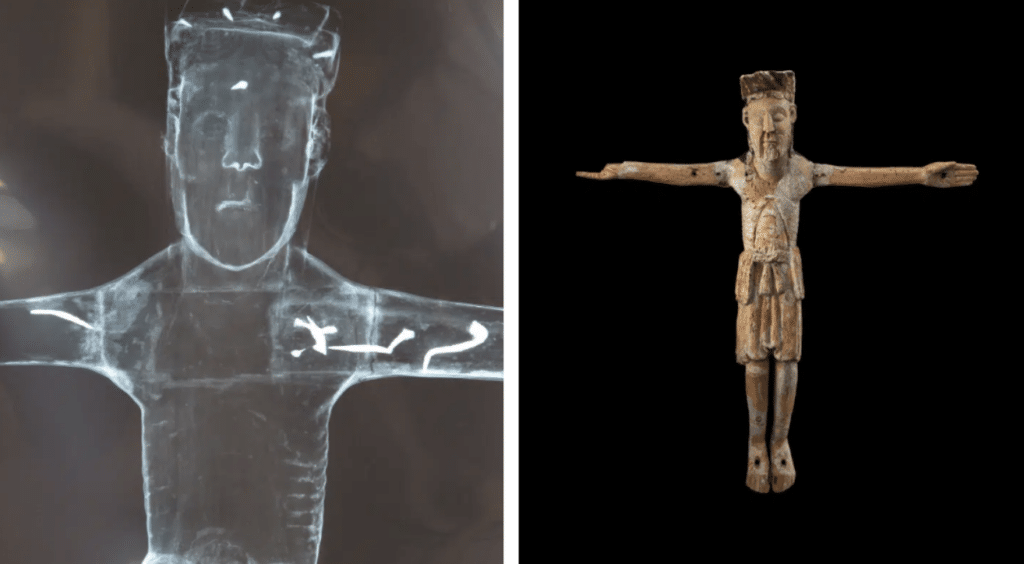
(Christ of the Battles of the Salamanca Cathedral)
The analysis includes an examination of the materials, the techniques used, and any previous work that may have been done. At this stage, a decision is made regarding the appropriate treatment for proper restoration.
Before beginning conservation and restoration treatments, it is necessary to protect the most delicate areas of the artwork and even secure and consolidate the layers of paint that have lifted.
Then you have to clean up the construction site, mold, insects, and any soot or dust that may have accumulated on the surface of the structure are removed. Cracks and fissures are repaired using resins, adhesives, or other materials compatible with the structure being restored.
A volumetric reintegration, there are times when sculptures or wood carvings have cracks or are missing parts; in these cases, the missing parts are filled in using putty or other materials, while in other cases the lost sections are not restored.
A [ ] is also performed color restoration, to restore its aesthetic value without altering the original work. The colors are applied to areas where paint is missing, while respecting the tones, glazes, and finishes of the original image, always in accordance with international restoration standards.
Finally, layers of varnish are applied to protect the artwork and its finish. This seals the artwork against moisture, smoke, and temperature changes.
The key to restoring sacred art—or any type of art—is preventive conservation, which means caring for the artwork to ensure its longevity. Humidity and temperature must be kept under control, and it is important to avoid direct exposure to sunlight, use appropriate non-abrasive cleaning products, and train staff to care for the artworks properly in order to prevent accidental damage.
Although it is not the ideal option, there are times when it is impossible to restore a work of art; in these situations, the sacred art can be replaced.
There are cases in which an item can be replaced to prevent further damage to the artwork; for example, during processions, a replica can be used so that the substitution does not result in the loss of the original—on the contrary, it aims to preserve it for the long term.
The decision a person must make when considering whether to restore or replace an item depends on various factors, such as the condition of the work, its artistic or historical value, its degree of authenticity, and the opinion of specialists; with the latter factor being the most influential; when deciding to replace or restore a piece, one must seek out the best specialist possible.
| Appearance | Description | Objective |
| Respect for Authenticity | Restoration should not be limited to repairing visible damage; rather, it should preserve the identity, history, and original characteristics of the work. | Preserve the historical, artistic, and religious value of the piece. |
| Minimal intervention | Restorers strive to work only on the necessary areas, avoiding unnecessary or excessive alterations | Preserve as much of the original material as possible. |
| Reversibility of treatments | The materials and techniques used must be capable of being removed in the future without causing damage to the structure. | To facilitate future interventions using more advanced methods and to protect the integrity of the piece. |
| Preservation of the Original Appearance | Changes that alter the historical appearance of the work or change its meaning should be avoided. | Preserve the visual and cultural authenticity of the image. |
| The Historical Significance of Aging | The signs of the passage of time, when they do not compromise the preservation of the work, are part of its history. | Recognize and protect the wealth accumulated over the years. |
| Preserving Devotional Value | In addition to their artistic value, works of sacred art serve a religious and spiritual purpose for the faithful. | To preserve its meaning and use within the religious tradition. |
The choice between repair or replace a play by sacred art requires a rigorous analysis of multiple factors. In most cases, restoration is the best option because it preserves the historical, artistic, and spiritual value of the piece. However, when the damage is irreversible or there is a safety risk, replacement may be a justified solution.
In any situation, the opinion of specialists in conservation and restoration should be the primary criterion. Only through a professional assessment can we ensure that interventions respect both the authenticity of the works and their religious and cultural function. Preserving sacred art means protecting an essential part of our history, our identity, and our heritage so that it may continue to be appreciated by future generations. The Restoration Department of Granda We have extensive experience restoring all types of religious artwork. If you need to consult an expert, please don't hesitate to ask us.

