


A church is not just a building, it is a sacred place. A space where the community meets the divine, where architecture and art become visual theology. For this reason, to propose a complete renovation of a church is one of the most complex and responsible tasks a parish or diocese can face.
Looking ahead to 2026, it is a matter of being able to ensure that the space responds to liturgical needs without losing both its historical and spiritual essence. A poorly planned renovation can result in a functional, but sterile space. A well-executed renovation revitalizes faith for generations.
At Granda, we have worked on hundreds of these processes. This guide is designed to help you navigate the main phases of comprehensive planning.
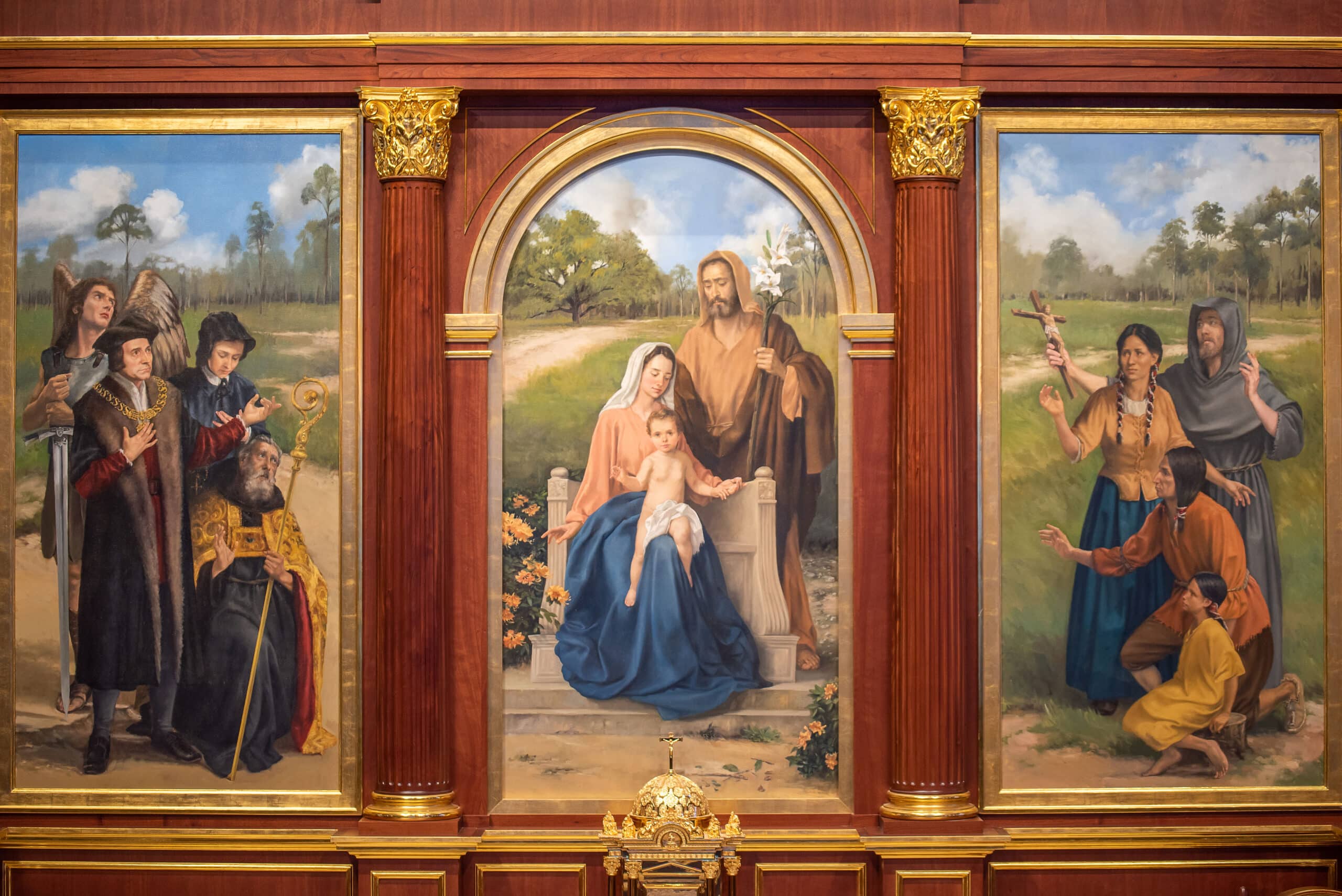
Photo: St. Thomas More Co-cathedral. Tallahassee
A common mistake is to start with visible problems (leaks, peeling paint, insufficient lighting, etc). Although these problems are urgent, they are often symptoms of larger problems or a lack of sustained maintenance.
It is very important to have a professional diagnosis from structural condition of the church, facilities and energy efficiency. At this point, the basic sanitation needs will be defined, which will serve as a subsequent canvas for the art.
This is Granda's specialty and where the greatest shortcomings usually arise. We must ask ourselves:
A renovation of catholic churches integral implies a rearrangement of sacred space to adapt it to the post-conciliar liturgical norms, always with a deep respect for the history of the building.
It is not about modernizing for the sake of fashion, but about updating to contribute positively to the liturgy. An honest evaluation may reveal that, in addition to fixing the floor, it is time to replace the altarpiece or relocate the tabernacle, to give it the central dignity it deserves.
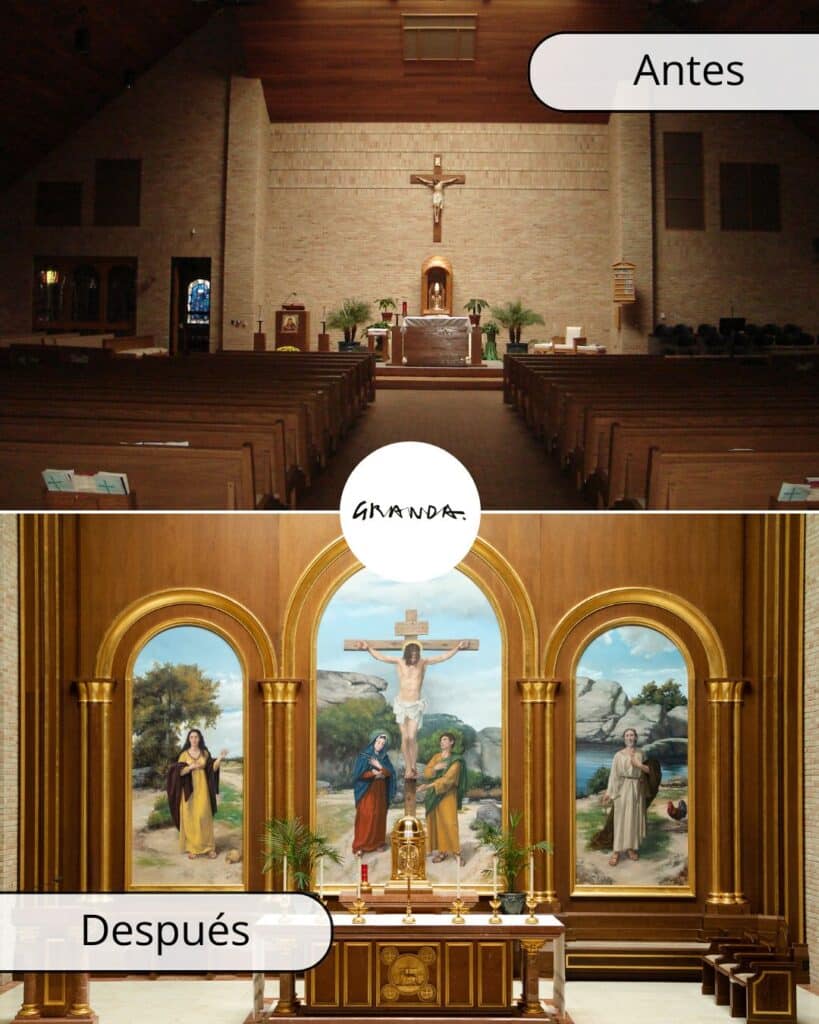
The success of a comprehensive church renovation in 2026 will depend on who is in charge. A project of this magnitude cannot be managed by a general contractor alone.
Sacred art requires a specific sensitivity, it needs a team with a deep knowledge of both theology and technical architecture. This is where the model of Granda offers total integration.
For a comprehensive renovation, your ideal equipment should include:
At Granda, we do not subcontract professionals and have them under one roof in our workshops. In this way, we ensure that the design of the new altar and ambo are in perfect aesthetic and theological harmony with the architecture of the church, avoiding stylistic “patches”, which are very common in this type of renovation.
Once the technical needs have been defined and a team has been formed, the creative phase begins. This is the moment to define the iconographic program. What theological message do we want the renovation to convey? What figures of saints or mysteries should be represented?
At a time in history when everything is ephemeral, the Church must bet on the eternal. An integral renewal must have as its priority the use of materials that age with dignity omes natural marbles, solid woods, bronze and precious metals with high quality baths.
In our workshops, we work with raw materials using ancestral techniques. From wood carving for a new altarpiece, to bronze casting for a new altarpiece, to bronze casting for a new altarpiece, to bronze casting for a new altarpiece. headline image. The quality of materials and the execution of the techniques is what makes the difference.
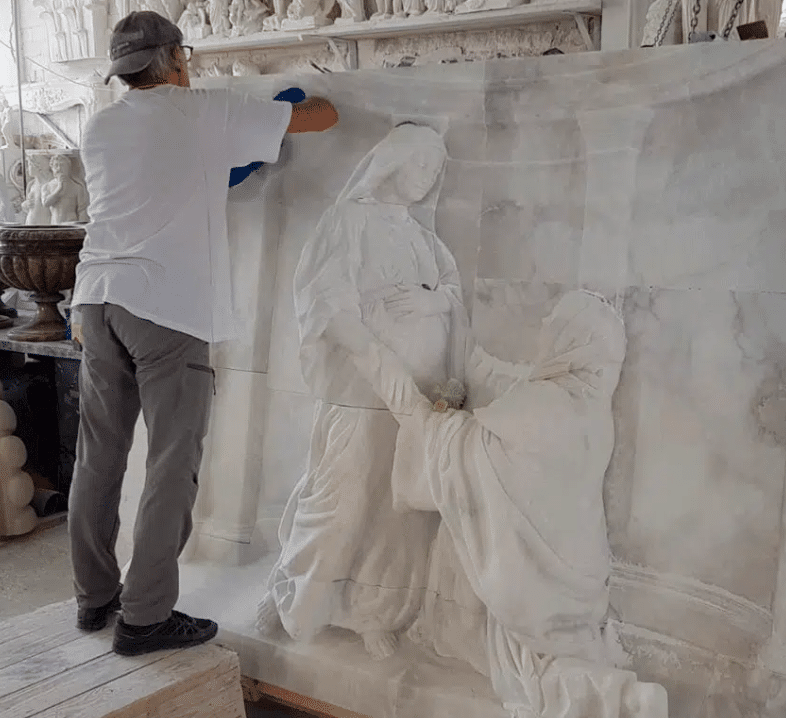
Photo: Reliefs of the University of Navarre Clinic
A complete renovation for a church is not quick. Impatience is a clear enemy to artistic excellence. A realistic timeline for a project would be:
| Preliminary phase | Technical and liturgical evaluations, and selection of the management team. |
| Design phase | Development of a preliminary project, artistic sketches, 3D renderings to visualize the result, as well as detailed budgets and a parish financing plan. |
| 3. Execution phase | Civil works, and at the same time, manufacture of artistic elements. |
A great advantage of working with an integrated service such as Granda's is the centralization. Delays caused by the lack of coordination between the different suppliers are avoided, since we take care of the creation of the fixed elements (altarpieces or chairs) as well as the mobile ones (goldsmith work or textiles).
To help you choose exactly the parts you need and avoid possible oversights in your budget, we strongly recommend reading our article on “Liturgical furnishings, essential pieces for churches.”. In it, we delve into the symbolic and practical function of each of the elements.
In addition to the furniture, your renovation should have:
The first step to a successful renovation is a good assessment. If your parish or diocese is planning a reform by 2026, now is the time to begin the design phase. In Granda
At Granda, We understand the importance of this challenge, because we have been dedicated to them for more than a century. If your community is ready to take this big step, we are prepared to accompany you during the whole process and we will advise you from the technical diagnosis to the artisan execution.

